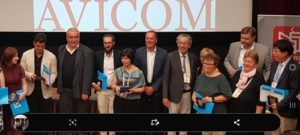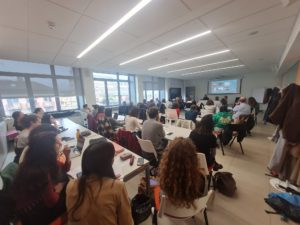
Dear colleagues,
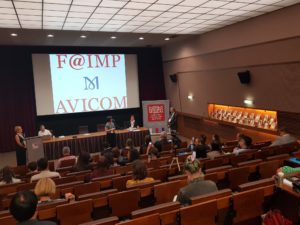
You will find most of the contributions to our conference in Turin 2024 in our website category “Reports”.
ICOM AVICOM- Audiovisual and New technologies
ICOM Museum International Commetee
Dear colleagues,
You will find most of the contributions to our conference in Turin 2024 in our website category “Reports”.
Dear Member of AVICOM:
Due to circumstances beyond the control of AVICOM, we are extending the period that AVICOM members in good standing may submit their credentials for candidacy to the AVICOM Board. This will allow AVICOM members who did not receive the initial Call for Candidacy an opportunity to submit their application and credentials. Please note that if you have already submitted your application, you do not need to re-submit it. This extension period is only for people who have not previously submitted their application and credentials in the initial Call for Candidature.
We are arriving at the end of the term for the current members and officers of the AVICOM Board. The regular term for a Board member is three (3) years. The election and installation of the new Board will coincide with the AVICOM General Assembly to be held in Dubai in November.
There are nine (9) Board positions available: Chairperson (1), Vice- Chairperson (1), Secretary (1), Treasurer (1) and Ordinary (At-Large) Members (5). Those among you who wish to be a candidate to serve on the AVICOM Board are asked to submit, before 13 September, 2025, a completed candidature form as well as a biography of 10 lines (maximum length), a CV and a recent photo. You must also indicate which Board Position you wish to be considered for: Chairperson (1), Vice-Chairperson (1), Secretary (1), Treasurer (1) or Ordinary (At-Large) Member (5). Applications without a specific Board position identified will be invalid.
These applications will be collected and validated by the Election Officer.
Condition 1: The nominee must be a member of AVICOM in good standing at the time of their candidature and current in the payment of his or her ICOM membership dues for 2025.
Condition 2: The nominee must be willing and able to serve as a member of the AVICOM Board. The candidate must acknowledge that he or she will be responsible for all expenses, including travel, related to his or her position if elected. For planning purposes, you should assume physical attendance to at least two Board meetings per year. Typically, the June meeting is held in Paris in conjunction with the ICOM General Assembly and a Fall meeting is held in another city, usually in Europe. In addition, there may be other meetings, symposia and conferences that will require your attendance.
Condition 3: Existing Board Members who are serving their first term can be nominated and elected to one (1) additional term for a total of two (2) consecutive terms. A member of the Board may be subsequently elected as Chairperson for a maximum of two (2) additional term
Condition 4: The following individuals are ineligible for membership of the AVICOM Board:
We should also note that, according to the Internal Rules that govern AVICOM, no more than two Board Members may be from any one Country. If more than two individuals from any one country are nominated, only the two individuals with the greatest number of votes shall be eligible to serve. Also, if you are currently on the Board, you can only occupy the same position for two consecutive terms. If you are in this category, you must apply for a different position on the Board.
Bob Haroutunian bob@ppiconsulting.net
Election Officer for the election of the Board members of AVICOM for 2025- 2028
Dear AVICOM members,
I cordially invite you to our this year’s General Assembly (hybrid) which will be held during our conference in Turin.
If you want to participate online, please inform our General Secretary, Anna Maria Marras: secretary.avicom@icom.museum
Link to the registration form:
https://docs.google.com/forms/d/e/1FAIpQLScE3s9QidYgY7J-es51HERbMTje2fUUkxzbwVfqiXl-YQ67iQ/viewform
Any problems with the registration? Please contact: secretary.avicom@icom.museum
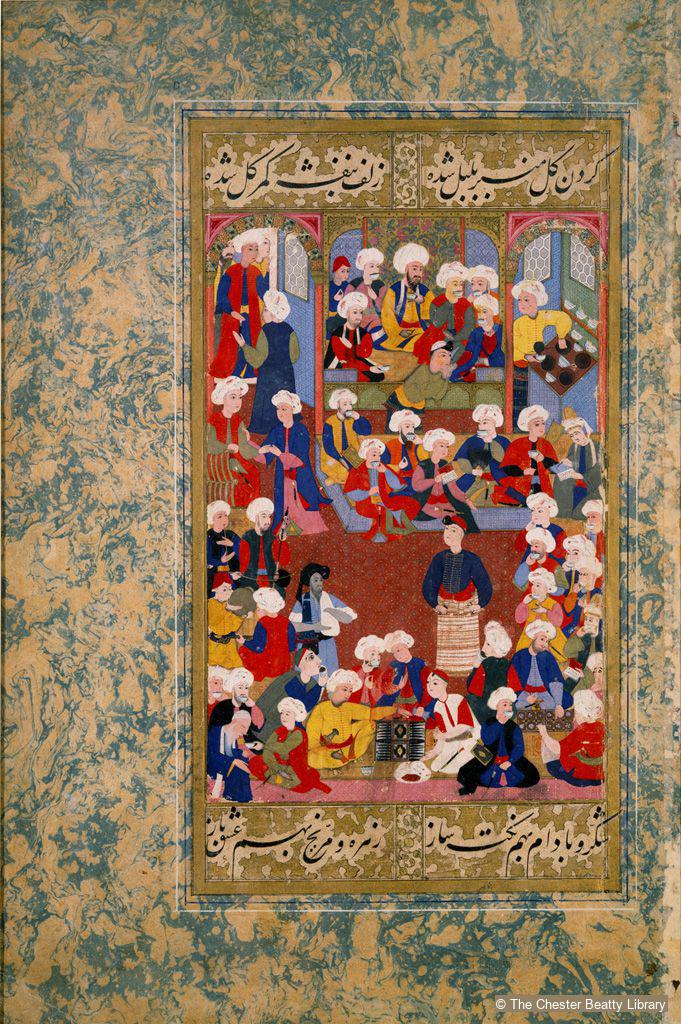
Photo: Coffee House. Chester Beatty Library Dublin. Copyright: MWNF
Following AVICOM’s Annual Conference in St Andrews, Scotland, on “Sustainable Preservation and Promotion of Heritage: The Virtual Museum”:
INVITATION TO PARTICIPATE IN MUSEUM WITH NO FRONTIER’S (MWNF) NEW ONLINE EXHIBITION ON FOOD AND ENVIRONMENT, WITH SPECIFIC FOCUS ON THE ISLAMIC WORLD:
Exhibition title:
THE TABLE IS SET. Food traditions and legacy in the Islamic World.
A MWNF online Exhibition inspired by the Exhibition DINING WITH THE SULTAN. The fine art of feasting organised by the Los Angeles County Museum of Art (LACMA).
Foreseen Themes:
SOCIAL LIFE (sharing food at Islamic courts; sharing food in today’s societies; Ramadan; etc.) RELIGION (eating rules of Islam; special dishes/tableware; Ramadan, etc.)
ENVIRONMENT (the balance between food and nature; preservation methods and innovation; seasonal cuisine; techniques of recycling; water; etc.)
GENDERED ROLES (tasks and responsibilities of men and of women in agriculture and animal husbandry; the production and preparation of food; feasts; etc.)
COEXISTANCE (how food contributes to mutual knowledge; culinary syncretism; etc.)
The Exhibition will be set up in cooperation with our Partners. Its development will be based on the MWNF methodology, which is the result of many years of experience in this field. Further to the recent AVICOM event in St Andrews it is a great pleasure to extend the invitation to all museums that are interested in the topic of the Exhibition.
MWNF online Exhibitions are conceived as an opportunity for MWNF Partner institutions to jointly create new exhibitions using material that is already in the MWNF database as well as any new material selected specifically for the Exhibition. The shared curatorial work is at the heart of our process and platform. Here we have to bear in mind that the MWNF network includes museums hosting collections that are closely related to the country’s history and culture (e.g. Amman Citadel Museum) and museums hosting collections concerning primarily other countries and cultures (e.g. The British Museum).
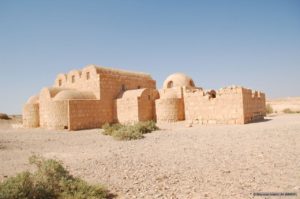
Photo: Jordan Qusayr Amra
The overall thematic structure and curatorial concept of all MWNF online Exhibitions is that they must provide equal opportunities for both types of Partners to contribute to an Exhibition.
Also, it should be reminded that MWNF Exhibitions do not foresee an overall curatorial responsibility but the Exhibition will be the result of different approaches, different perspectives and different interpretations of the items on display. The Exhibition project is designed to facilitate synergies between the various contributions and to facilitate the development of a logical narrative that can be followed by visitors.
The MWNF online Museum includes a Permanent Collection, Exhibitions and a Database. It is set up as an independent entity and is managed by Museum With No Frontiers. Access to all MWNF products is free.
If you are interested in joining, please get in touch with Eva Schubert at eva.schubert@museumwnf.net.
We look forward to welcoming you!
More about MWNF: https://www.museumwnf.org/ & https://www.museumwnf.org/about
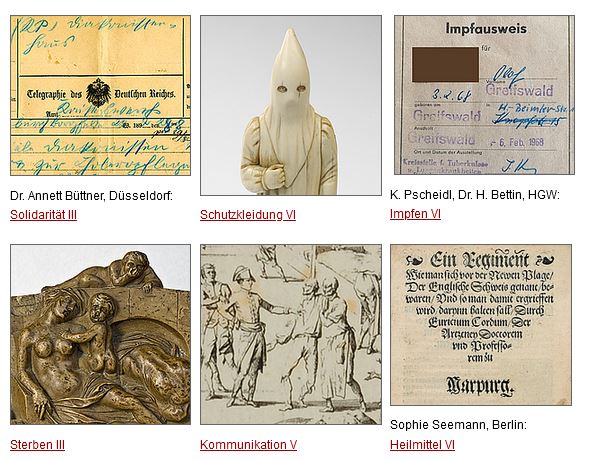
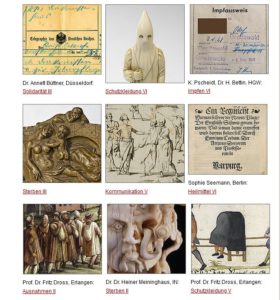
Gallery “COVID-19 & History”, Deutsches Medizinhistorisches Museum Ingolstadt
YouTube Video “The end of the tancs?” on the war in Ukraine, Deutsches Panzermuseum Munster
1) Staatliche Museen zu Berlin – Preußischer Kulturbesitz. Institut für Museumskunde (Ed.): Statistische Gesamterhebung an den Museen der Bundesrepublik Deutschland für das Jahr 2018. Including an English Summary. Berlin 2019 (= Materialien aus dem Institut für Museumsforschung, Heft 73)
2) Ibid.
3) Staatliche Museen zu Berlin – Preußischer Kulturbesitz. Institut für Museumskunde (Ed.): Statistische Gesamterhebung an den Museen der Bundesrepublik Deutschland für das Jahr 2020. Including an English Summary. Berlin 2022 (= Materialien aus dem Institut für Museumsforschung, Heft 76)
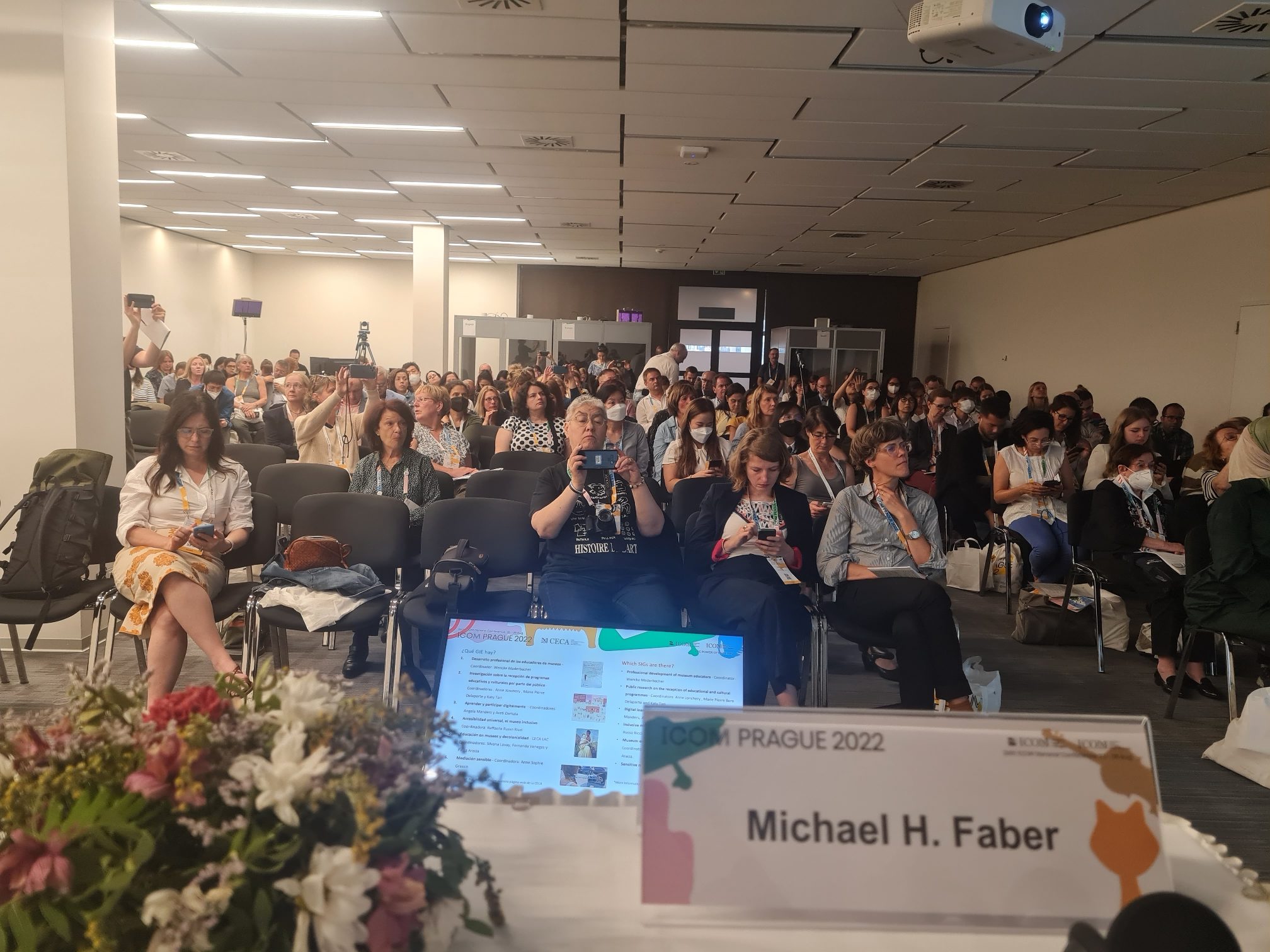
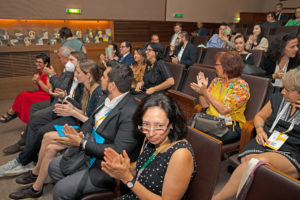
The 26th General Conference in Prague was extremely successful for AVICOM. For the first time, the Media Committee organized joint meetings with ICOM Germany and the international committees CECA and MPR, which were attended by a total of around 200 guests. The main topics were “Digital Media for the Preparation, Implementation and Follow-up of the Museum Visit. Sense, Superfluity or Nonsense?” and “The COVID19 Challenge: Museums and their digital engagement in times of crises. Results of the Solidarity Project of AVICOM, MPR and ICOM Germany”. In another session, which was also well attended, AVICOM presented “News from the world of audiovisual and digital museum media”.
In the ICOM session “Solidarity Projects”, AVICOM and MPR reported on their investigative project “The COVID19 Challenge”, which attracted particular attention and response from the participants.
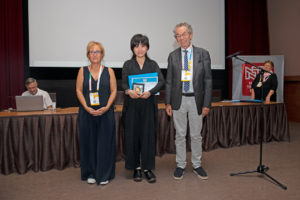
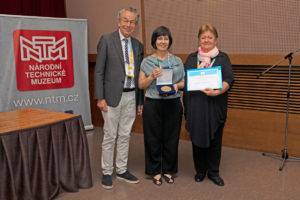
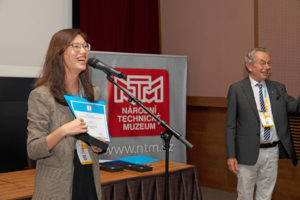
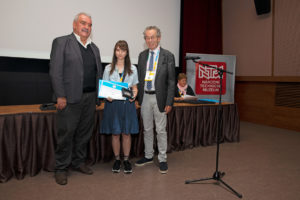
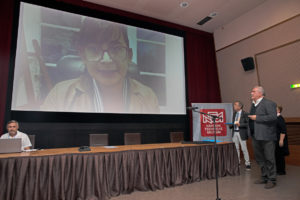
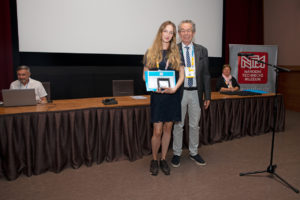
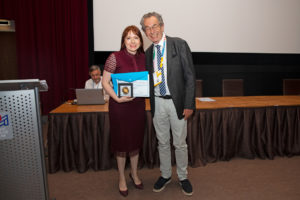
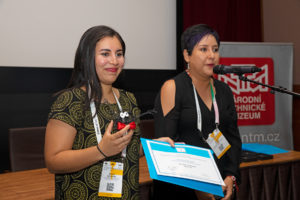
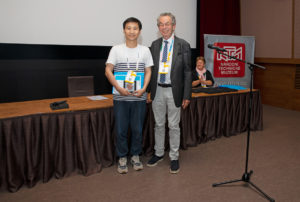
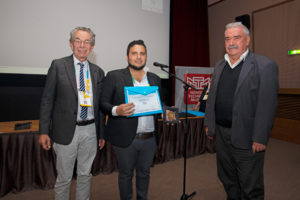
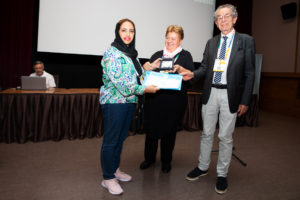
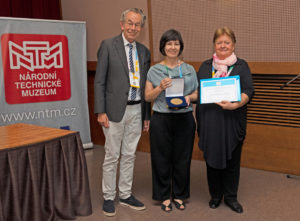
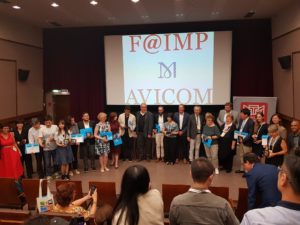
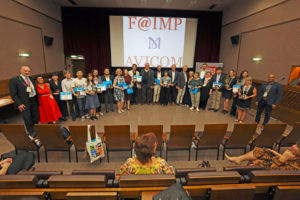
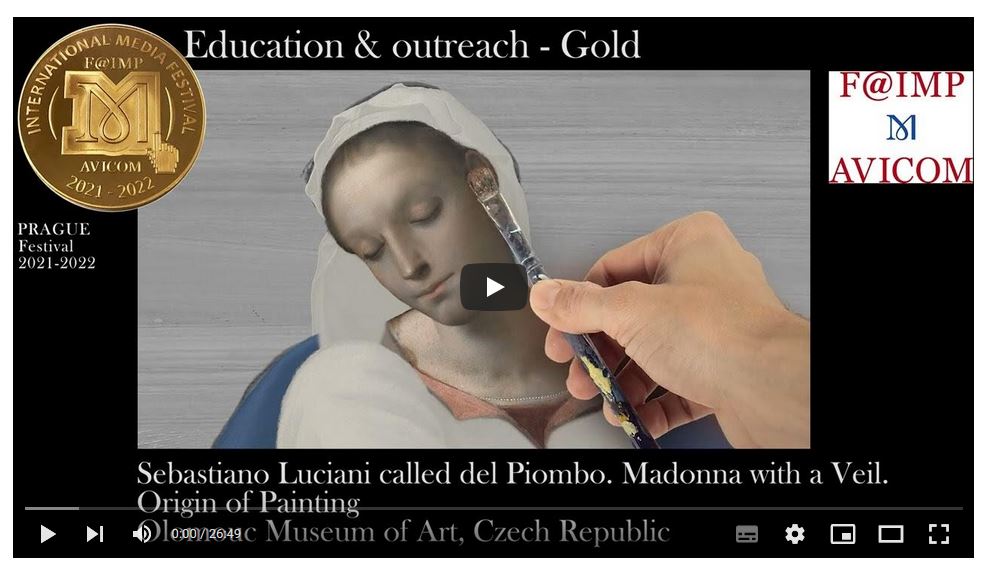
The highlight of the AVICOM activities in Prague was the award ceremony of the AVICOM media festival “faimp” to the winners, followed by a reception in the National Museum of Technology in Prague. Around 80 guests attended, including many representatives of international committees.
Click here to watch the award ceremony video: https://youtu.be/vqVsJT8p71o
Under “Reports” you will find reports and a selection of the presentations at the sessions.
Here the contributions of the AVICOM representatives:
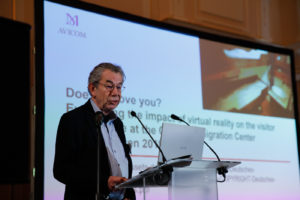
Keynote speaker of the first conference day was AVICOM President Dr. Michael H. Faber (Germany): “Communication and mediation. Digital, analogue, personal? About must-have, nice to have and nonsense”.
Digital and social media promote the public perception of museums, pave new ways of outreach and enable a more intensive involvemeht of target groups in museum work. This makes the following questions all the more important: How can digital media be used sensibly? How can they make the original tangible? Have conventional mediation and communication had their day? After all, despite all the digitalisation, museums remain analogue.
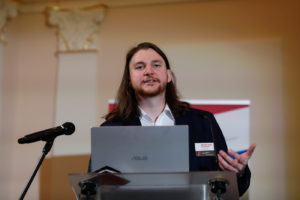
Michael Louis Eulenstein (Germany) presented “The COVID-19 challenge. Museums and their digital engagement in times of crisis”.
The COVID-19 pandemic and the digital transformation are having a major impact on the museum sector. Museums were faced with the challenge of developing formats and concepts that could be played out digitally. The goal of the joint “Solidarity Project” of AVICOM, MPR and ICOM Germany, financed by ICOM, was to collect best practice examples that can serve as models, especially for small and medium-sized museums. AVICOM will publish the results of this project in January 2023.
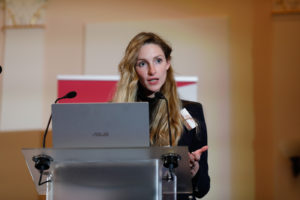
Dr. Kamila Oles (United Kingdom) presented “Culture power to inspire development in rural areas: Virtual Orkney Northern Isles exhibit platform”.
CUPIDO Virtual Orkney North Isles was created as a shared exhibit virtual platform. The online galleries and virtual tours display the heritage of all six isles so that Orkney communities and users from around the world can virtually explore the beauty of Orkney Northern Islands’ natural and cultural legacy. Simultaneously, a touch screen and VR set showcasing the virtual exhibits have been placed on-site in the heritage centres in Orkney North Isles. The videos and audio reflect the unique atmosphere and climate determined by Orkey’s natural elements, such as wind, ocean, sea birds and the ancient native Orkney sheep.
Dr. Anna Maria Marras (Italy) presented “Concersational assistants, chatbot: how language technologies interact in the everyday life of GLAM institutions”.
The term ‘conversational interface’ indicates a set of human-machine interfaces based on dialogue which includes: This type of technology is continuously developing and improving and can be excellent applications for museums as well. The presentation explored the history of these applications in the museums and GLAM institutions, telling their evolution and highlighting future applications.
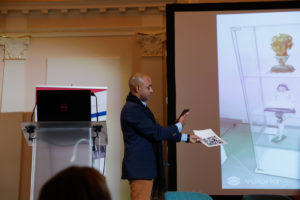
Ph.D. Mohamed Ismail Ibrahim (Egypt) spoke about the “Virtual Museum of Tutankhamun”.
The use of immersive virtual reality (VR) systems in heritage can allow users to visit inaccessible sites, as well as can allow both greater richness and diversity in content. The concept of the Tutankhamun Virtual Museum is to give certain extended reality experiences that emphasize some aspects of Tutankhamun’s stories and treasures in an appealing and educational manner, such as virtual visits, 360-degree video, mixed reality, augmented reality, and hologram.
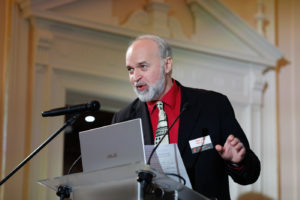
MgA. Aleš Kapsa (Czech Republic) informed about “The Labyrinth and the Theatre on the Stage of the World”:
The video mapping Labyrinth of the World and Paradise of the Heart and the film Theatre of the World are the current museum audiovisual adaptions of Comenius’ work in the new permanent exhibition On the Stage of the World – Jan Amos Komenský and His Time. The exhibition opened on 28 March 2022 at the J.A. Comenius Museum in Uherský Brod on the occasion of the 430th anniversary of the birth of the thinker, philosopher and writer. Kapsa’s paper offered a reflection on artistic and technical approaches to the adaption of timeless historical content within a modern museum presentation.
You will find more at: https://musear-platform.com