Joint webinar “Social Media” by MPR and AVICOM: Experts wanted.
The International Committees MPR and AVICOM are planning a webinar on the topic of “Social Media” in preparation for their joint session at the ICOM General Conference in Dubai. This webinar is scheduled to take place in the summer. It will address questions regarding the efficient, sustainable, and inclusive use of social media by museums, as well as legal and ethical aspects. A small working group is now being formed to prepare and conduct this webinar. If you have an academic background in social media usage or consider yourself an expert in this field and are interested in volunteering for this working group, please contact avicom@icom.museum. Thank you!
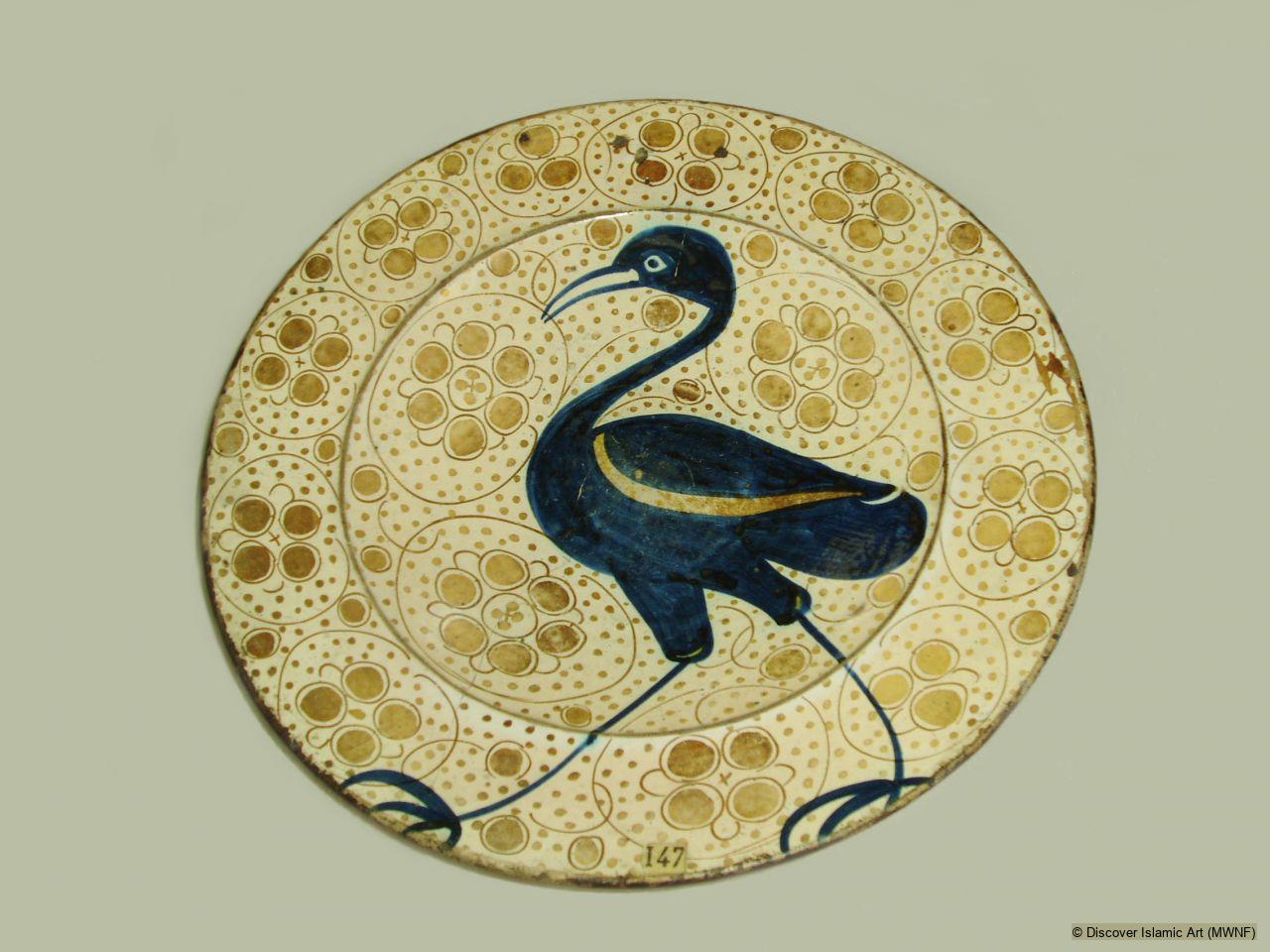
“The Table is set”: The new online exhibition in cooperation with AVICOM goes live 14 March
Within the MWNF programme on the occasion of Ramadan 2025
In cooperation with AVICOM
Under the patronage of UNAOC:
The new Museum With No Frontiers online exhibition The Table is set. Food Traditions and Legacies in the Islamic World will go live on Friday 14 March 2025 at 00:00 CET:
https://exhibitions.museumwnf.org/the_table_is_set/en/
MWNF_TableIsSet_Announcement_010325
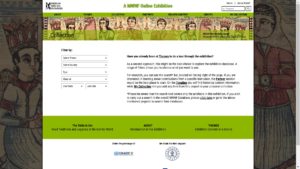
Collection Start Page
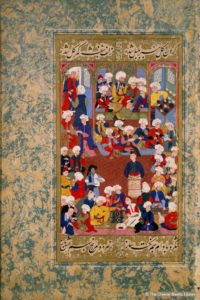
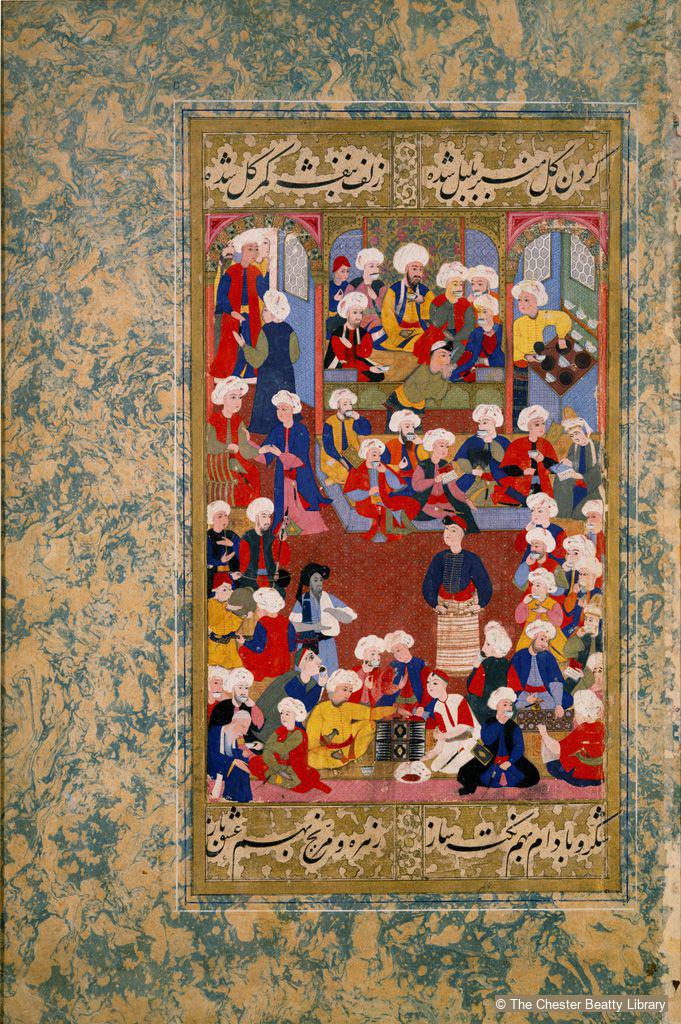
Chester Beatty Library Dublin: Coffie House
Press Text:
This exhibition by Museum With No Frontiers explores the rich food and culinary traditions of the Islamic world, offering a deeper understanding of Islamic culture and fostering cross-cultural dialogue. What sets this exhibition apart is its uniquely international approach, with a curatorial team drawn from diverse cultural, professional, and academic backgrounds. Combined with remarkable collections from various museum partners, it embodies MWNF’s commitment to cultural diversity.
The key advantage of a digital online exhibition is its unparalleled accessibility, allowing people to engage with it regardless of location or financial means. This global reach democratises knowledge and encourages inclusivity, overcoming the geographic and financial limitations of physical exhibitions. Digital exhibitions avoid the expenses of transporting, insuring, and conserving fragile artefacts like manuscripts and photographs, which can remain accessible indefinitely in digital form. Viewers can enlarge images to explore details, enhancing the educational experience. The involvement of an international team fosters a diverse and inclusive narrative, moving beyond narrow perspectives, and the digital format can include objects from multiple institutions, offering depth that physical exhibitions often struggle to achieve.
The virtual exhibition also makes possible the inclusion of monuments, offering an immersive exploration of architectural and cultural landmarks that cannot be physically transported. MWNF maintains an extensive database of cultural heritage objects, sites, and monuments, providing exhibition visitors with comprehensive and engaging experiences that enhance their understanding of historical and artistic contexts.
Food, a basic human necessity, is a force that can unite or divide, foster peace, or spark conflict. It is not merely a means of survival, but a reflection of cultural identity, personal preferences, and the dynamics of social, political, and economic power. The exhibition’s curatorial perspective is structured around six main themes, each shedding light on the pivotal roles food has played in shaping the Islamic world.
Theme I, Life at the Court, focuses on ways in which food was central to Islamic courts, which served as more than just physical spaces. They were hubs of power, social life, and cultural development. Elaborate meals, refined table etiquette, and newly-created recipes symbolised status and prestige, contributing to the development of culinary arts and cultural identity.
Theme II, Social Life, examines food as a universal medium for connection, and for sharing beliefs, values, and social hierarchies. Across the Islamic world, communal meals fostered intimacy, belonging, and unity.
Theme III, Religion, explores the intricate relationship between food and faith in Islamic culture. Religious beliefs shaped and are still shaping food practices, from dietary laws to traditions observed during festivals such as Ramadan and the Eids. More than just nourishment, food in Islamic culture represents humility, hospitality, and discipline, creating a profound connection between the individual and the divine.
Theme IV, Environment, highlights how Islamic civilisation developed sustainable agricultural practices that balanced environmental stewardship with human needs. From innovative farming techniques and water management to soil care, these practices ensured resource sustainability while shaping culinary traditions. This theme also explores the ways in which cultural exchanges influenced ingredients, cooking techniques, and serving practices.
Theme V, Gender Roles, focuses on the collaborative contributions of men and women in food production, preparation, and presentation. Together, their efforts shaped the culinary and social legacy of the Islamic world, evidence of the dynamic balance of responsibilities in sustaining food traditions and cultural values.
Theme VI, Coexistence, explores how food acted as a unifying force in the multicultural Islamic world. Despite communities’ religious and social differences, shared meals fostered connections and enriched food traditions. Culinary interactions led to vibrant food-related industries and a rich material culture, with fusion cuisines reflecting both unity and diversity. Food became a powerful symbol of coexistence, transcending boundaries and facilitating cultural exchange.
This exhibition is more than a showcase of culinary traditions; it is an exploration of how food shapes identity, fosters resilience, and transcends time and geography. By connecting the diverse legacy of the Islamic world to contemporary practices, it reveals food as a bridge between past and present, tradition and innovation. Through its themes, the exhibition invites visitors to reflect on food’s profound ability to nurture not just the body, but also the bonds that unite communities and cultures. It shows that the simple act of sharing a meal carries universal meaning—offering hope, understanding, and the potential for greater harmony in a complex, interconnected world.
Virtual Museums – A Plea: New Publication supported by AVICOM – Free Download!

“Around the clock. Around the world” – a plea for virtual museums”
“Establish virtual museums!” is the plea of the ‘Virtual Museums Forum’ group. In their just published book “Virtual Museums – A Plea”, 11 authors from the fields of culture, science, business and law discuss the opportunities that digital technologies open up for the cultural sector when virtual museums are created. In their book, which is printed but also available for download in open access mode, the group of authors, whose core is at Heinrich Heine University Düsseldorf/Germany, provides an overview of the characteristics and especially the possible fields of application of virtual museums. These are created exclusively on the Internet and may complement analogue museums without replacing them. The group of authors points out the advantages and disadvantages of virtual museums and discusses their structure and organization, legal and technological aspects as well as the question of sustainability.
This contribution to the discussion on specific digitization in the museum sector was elaborated and published with strong support by AVICOM. It is published in October 2024 by de Gruyter Publisher / Deutscher Kunstverlag / düsseldorf university press (parallel in German and English language). It was presented by Prof. Dr. Bernd Günter (HHU Düsseldorf) on October 18 at the AVICOM conference in Turin/Italy.
On behalf of the group of authors, Dr. Julia Römhild and Professor Dr. Bernd Günter (both HHU Düsseldorf) are grateful for any feedback and discussion. They provide insights into the characteristics, requirements and opportunities of virtual museums.
Download of the book at: www.deGruyter.com
https://www.degruyter.com/document/doi/10.1515/9783422802339/html
https://www.degruyter.com/document/doi/10.1515/9783422802377/html
Licence: https://creativecommons.org/licenses/by/4.0/
Contact:
Dr. Julia Römhild, Academic Lecturer and Researcher for Cultural Management,
Heinrich-Heine-Universität Düsseldorf / Germany
e-mail: julia.roemhild@hhu.de
Prof. Dr. Bernd Günter, Professor (em.) for Business Administration/Marketing, Heinrich-Heine-Universität Düsseldorf / Germany
e-mail: guenter@uni-duesseldorf.de
Updated program: AVICOM Annual Conference, Turin, Oct. 17-19, 2024
Dear colleagues, please find our updated program:
Invitation to the AVICOM General Assembly, October 18, 2024, in Turin
Dear AVICOM members,
I cordially invite you to our this year’s General Assembly (hybrid) which will be held during our conference in Turin.
If you want to participate online, please inform our General Secretary, Anna Maria Marras: secretary.avicom@icom.museum
AVICOM Conference Turin October 17-19: Register now!
Link to the registration form:
https://docs.google.com/forms/d/e/1FAIpQLScE3s9QidYgY7J-es51HERbMTje2fUUkxzbwVfqiXl-YQ67iQ/viewform
Any problems with the registration? Please contact: secretary.avicom@icom.museum
Invitation to the SAREC Project Conference of ICOM Italy, ICOM Europe and AVICOM
Over 30 presentations: The preliminary colorful program of the AVICOM Annual Conference in Turin, October 17-19, 2024
Dear colleagues,
The final program, including off-site events and the registration form, will follow shortly.
Preliminary program AVICOM Conference 2024
Registration form:
https://docs.google.com/forms/d/e/1FAIpQLScE3s9QidYgY7J-es51HERbMTje2fUUkxzbwVfqiXl-YQ67iQ/viewform
If you have any problems with this form, please contact: secretary.avicom@icom.museum
Last chance to participate: Museum Digital Sustainability Talks: 3 workshops and 1 conference … SAREC project of AVICOM, ICOM Italy and ICOM Europe
Participation is free! Here you find the informations about the workshops and the application form: